


Key Takeaways
- Study start-ups are critical for trial success, impacting timelines, compliance, and site readiness.
- Efficient planning reduces delays, operational risks, and improves data quality.
- Key activities include protocol development, site selection, regulatory submissions, training, and site activation.
- Common challenges like document processing delays, communication gaps, and manual workflows can be addressed with structured processes and technology.
- Centralized platforms, checklists, and proactive oversight help keep sites on schedule, optimize patient recruitment, and accelerate trial timelines.
Study startup is one of the most complex and time-consuming phases of clinical research, yet it is critical to trial success. This phase sets the foundation for the entire study, guiding every step of the trial lifecycle.
Despite advances in technology, clinical sites still face challenges that can slow progress. When executed efficiently, a well-planned study startup can shorten activation times, reduce operational risks, and ensure sites are prepared to collect high-quality data.
This blog outlines the key study startup activities, common challenges, and a step-by-step checklist to help research teams move smoothly from protocol approval to site activation.
Why Study Start-Up is Critical
The study start-up phase is more than a series of administrative tasks. It forms the operational backbone of a clinical trial. A well-executed start-up ensures that sites are properly qualified, budgets and contracts are finalized, regulatory approvals are secured, staff are trained, and technology is ready for accurate data capture.
Despite this, research shows that up to 85% of study delays stem from issues during site start-up, underscoring the criticality of this phase for overall trial success. When all elements of a start-up are carefully managed, studies benefit from smoother execution, faster patient enrollment, and a lower risk of protocol deviations.
On the other hand, a poorly managed start-up can delay site activation, slow recruitment, and introduce compliance risks. These delays often cascade to affect the entire study timeline and increase costs. To address these challenges, many organizations now appoint a dedicated study start-up specialist to coordinate early-stage activities, keep timelines on track, and ensure all stakeholders remain aligned throughout the process.
Key Activities in Clinical Trial Study Start-Up
The clinical trial start-up activities can be divided into several interrelated steps, each essential for maintaining momentum and avoiding delays.
Protocol Development and Feasibility Assessment
The study start-up begins with finalizing the study protocol, which defines the trial’s objectives, endpoints, procedures, and eligibility criteria. Once the protocol is approved, feasibility assessments are conducted to evaluate whether potential sites have the necessary infrastructure, patient population, staff, and operational capabilities.
Site Selection and Qualification
After feasibility assessments, sites are carefully selected and qualified. Factors such as prior trial experience, patient access, staffing levels, and available technology are evaluated. Qualified sites are then prepared for regulatory submissions, contracts, and budget agreements. By activating only capable sites, sponsors reduce the risk of delays later in the study and set the stage for smooth trial execution.
Contracting and Budget Negotiations
Budgets and contracts are often among the most time-consuming parts of a study start-up. Sponsors and sites must agree on payment terms, cost allocations, and operational responsibilities. Using standardized contract templates and maintaining transparent communication can speed up this process, ensuring that financial agreements are in place before site activation. This reduces the risk of delays and misaligned expectations once the trial begins.
Regulatory and Ethics Submissions
Regulatory approval is a critical milestone in a start-up. Essential documents, including the protocol, informed consent forms, investigator CVs, and local regulatory forms, must be submitted to IRBs or ethics committees. Moreover, following best practices in regulatory affairs and preparing thorough, accurate documents help prevent delays caused by incomplete or incorrect submissions, keeping the trial on schedule.
Training and Site Onboarding
Before sites can enroll participants, staff must be trained on protocol-specific procedures, GCP compliance, data capture tools, and safety reporting. Proper onboarding ensures that sites can execute the study correctly from day one, reducing errors and improving efficiency. Aligning training with data management practices also strengthens data integrity and trial quality.
Site Activation and First Patient In
The final step in study start-up is formal site activation. At this point, contracts are signed, regulatory approvals are secured, staff are trained, and technology is ready. Sites can then enroll their first participant, marking the transition from start-up to operational trial execution. Furthermore, close monitoring during early enrollment ensures that any issues are identified and addressed immediately, helping the study stay on track and meet its objectives.
Common Study Start-Up Challenges
Even experienced teams encounter hurdles during study start-up. Common challenges include:
- Slow document turnaround: Contracts, regulatory forms, and training materials can be delayed when processes are manual or responsibilities are unclear.
- Communication gaps: Sponsors and sites often use different platforms, which can lead to missed updates, misalignment, and slower decision-making.
- Regulatory complexity: Each IRB or ethics committee may have unique submission requirements, cause unexpected delays if not anticipated early.
- Site workload limitations: Sites frequently manage multiple trials at once, which can slow document review, training, and site activation.
- Manual workflows: Relying on email chains or spreadsheets to track progress creates inefficiency and increases the risk of errors.
Addressing these issues proactively is key to accelerating study start-up and ensuring smoother trial execution.
Step-by-Step Study Start-Up Checklist
Launching a clinical trial requires careful planning, coordination, and execution. The following checklist outlines the critical steps in the study start-up process to help sponsors, clinical teams, and sites stay organized, reduce delays, and ensure readiness for patient enrollment.
1. Designing and Optimizing the Protocol
The protocol is the backbone of any clinical trial, defining the study objectives, endpoints, procedures, and eligibility criteria. During start-up, it should be carefully designed and continuously optimized to align with trial goals. This includes reviewing enrollment targets, assessing procedural feasibility, and minimizing unnecessary complexity. A clear and well-structured protocol reduces operational challenges and lays the foundation for a smooth trial.
2. Building the Budget
A comprehensive and realistic budget is essential for successful study start-up. Teams should account for all anticipated costs, including site fees, investigator payments, laboratory services, patient reimbursements, technology platforms, and administrative expenses. Early budget planning ensures financial clarity and helps avoid delays from renegotiations or funding gaps. Sponsors should collaborate with sites to agree on terms and timelines before site activation.
3. IRB or Ethics Committee Approval
Regulatory compliance is a critical milestone in study start-up. Submitting the protocol and related documents to an Institutional Review Board (IRB) or Ethics Committee ensures the study meets ethical standards and protects participants. Maintaining clear communication with the IRB, such as scheduling kickoff calls and clarifying expectations, can accelerate approvals and reduce back-and-forth questions. Timely IRB approval is essential for moving forward with site activation.
4. Site Identification and Selection
Choosing the right clinical site is vital for successful enrollment and operational efficiency. Sponsors should evaluate potential sites based on patient population, staff expertise, facilities, prior trial experience, and capacity to manage study requirements. Early selection allows sites to prepare resources, complete necessary training, and coordinate logistics, ensuring a seamless start once the study is activated.
5. Optional Steps for Complete Readiness
Beyond the core steps, full readiness may also include contracts and budget negotiations, feasibility assessments, confidential disclosure agreements (CDAs), site qualification or pre-selection visits, site initiation visits (SIVs), and staff training. Including these elements ensures that all operational, financial, and regulatory requirements are addressed before enrollment begins.
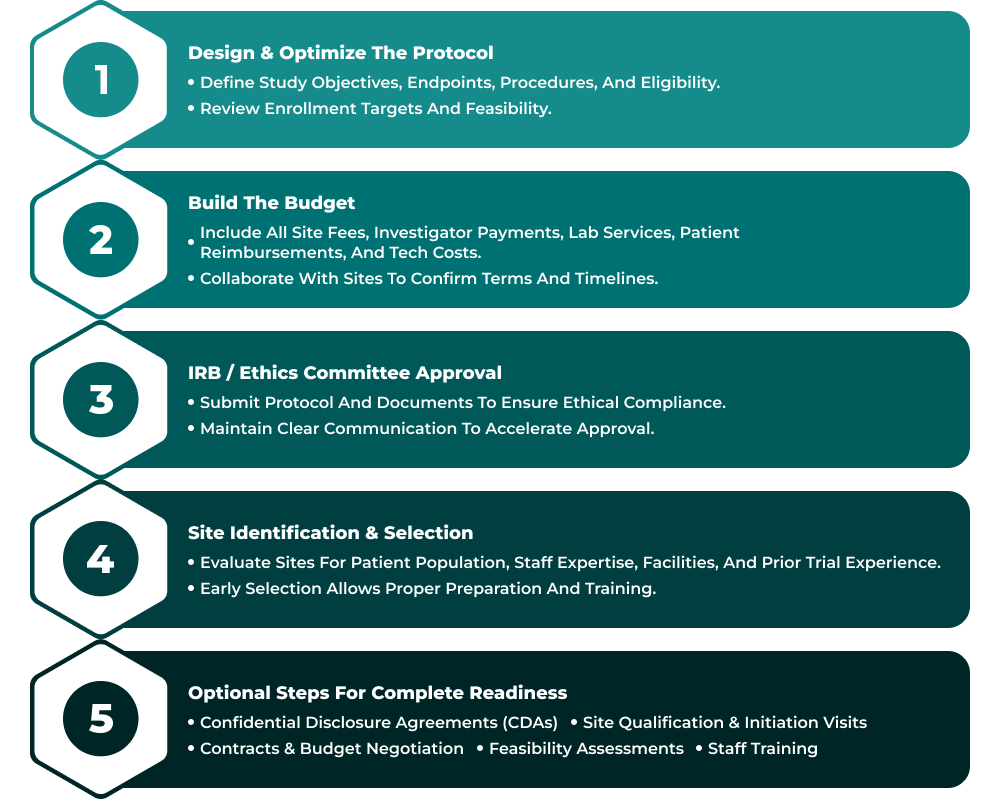
Following this structured checklist helps research teams streamline the start-up phase, reduce delays, and establish a strong foundation for the clinical trial. By systematically addressing each item, sponsors and sites can minimize risk, improve compliance, and accelerate clinical trial start-up activities.
Accelerating Study Start-Up
To accelerate study start-up, research teams should adopt structured workflows and leverage technology. Centralized platforms enable sponsors and sites to track regulatory submissions, contract statuses, training completion, and site readiness in real time. Features such as automated reminders, version-controlled document repositories, and shared dashboards reduce manual errors and prevent communication gaps.
In addition, integrating insights from internal resources helps teams better navigate trial design, operational requirements, and patient recruitment strategies. When combined with a clear checklist and proactive oversight, these tools allow research teams to anticipate obstacles, stay organized, and keep sites on schedule throughout the start-up phase.
Conclusion
The study start-up phase forms the foundation of every successful clinical trial. From finalizing the protocol to activating sites, a structured approach ensures regulatory compliance, site readiness, and efficient operations. By anticipating common start-up challenges, utilizing experienced study start-up specialists, and following a detailed checklist, research teams can reduce delays, improve data quality, and optimize patient recruitment.
Additionally, using a centralized clinical trial support platform streamlines document management, communication, and monitoring. This gives sponsors and sites the visibility they need to make informed decisions, address issues quickly, and accelerate study timelines.
