


Key Takeaways
- Clinical trial phases move from safety testing to long-term evaluation.
- There are 4 clinical trials phases, each with its specific goal.
- Phase 1 ensures safety, while Phase 2 studies effectiveness.
- Phase 3 confirms large-scale success, and Phase 4 monitors real-world safety.
- Every phase minimizes risks before new treatments reach patients.
Have you ever wondered how new medicines reach the market safely and effectively? Before a drug reaches a pharmacy shelf, it undergoes years of research and testing. This journey is called a clinical trial and is divided into four phases: Phase 1 to Phase 4.
These phases serve different purposes and help answer specific questions about the investigational treatment. Safety, efficacy, and long-term outcomes of new therapies are monitored across these phases.
In this blog, we’ll break down what happens in each stage, from early safety checks to large-scale effectiveness studies. You’ll understand the clinical trial phases, why they matter, and how many phases in a clinical trial contribute to protecting overall patient health.
Pre-Clinical Development
Before a potential treatment is tested on people, researchers ensure that it’s safe. During this stage, the treatment is studied in laboratories using animal models or cell lines to assess any potential harmful effects and to determine whether it shows promise for patients.
Clinical Development
Before new drugs, vaccines, or medical devices are widely available, they are carefully evaluated in clinical trial phases to determine whether they are safe and effective. At this stage, the product is referred to as an investigational treatment because it’s still being studied and has not yet been approved for public use.
Regulatory agencies then assess the data from these clinical trial phases to decide if the investigational treatment should be approved for patients. Most treatments progress through several clinical trial phases, with each phase designed to answer specific questions about safety, dosage, and efficacy. The four clinical trial phases include.
- Phase 1 focuses on safety.
- Phase 2 looks at effectiveness.
- Phase 3 confirms benefits on a larger scale.
- Phase 4 monitors long-term results after approval.
Phase 1: Evaluates Safety and Determines the Right Dosage
Phase 1 is the smallest and most controlled part of the process. It usually involves 20–100 healthy volunteers or patients. The main goal is to determine safety, dosage, and how the body processes the drug.
Here’s what typically happens in phase 1:
- Volunteers receive very small doses at first.
- Researchers closely monitor side effects and body reactions.
- Doses are increased gradually to determine the highest safe level.
At this stage, scientists collect early pharmacological data, including absorption, metabolism, and excretion patterns. This step is vital because it helps prevent harm in later phases. Without this careful start, the following clinical trial stages could expose participants to unnecessary risks.
Phase 2: Measuring Effectiveness and Side Effects
When Phase 1 confirms safety, the study is further expanded. Phase 2 includes several hundred patients who actually have the condition the drug aims to treat. The goal now is to assess the effectiveness of the treatment. Researchers also watch for short-term side effects that might not appear in smaller groups.
Typical Phase 2 trials might:
- Compare different doses to find the optimal response.
- Use a placebo or existing treatments for comparison.
- Track improvement in symptoms and quality of life.
While success in Phase 2 is encouraging, it doesn’t guarantee approval. Many drugs fail here if they don’t perform better than current options. Still, this is where we begin to see the real potential of clinical trials.
Phase 3: Large-Scale Validation
This phase is often the most expensive and time-consuming in clinical trial phases. Thousands of patients across multiple hospitals and countries may participate. Phase 3 confirms effectiveness, monitors side effects, and compares the new therapy against standard care.
Moreover, Phase 3 trials are crucial because they provide the evidence needed for regulatory approval. If the results are positive, the company can submit the data to regulatory agencies such as the FDA or EMA. However, if inconsistencies appear, researchers may need to redesign the study or conduct another trial.
Phase 4: Monitoring Real-World Impact
After a new therapy gets approved, it doesn’t mean the work is done. Phase 4 begins once the drug is available to the public. During this phase, researchers continue collecting information on side effects, performance, and patient satisfaction.
It’s often called ‘post-marketing surveillance.’ This ongoing phase helps discover rare or long-term side effects that smaller studies might have missed. For example, some issues only appear after thousands of people use the drug over time. This also plays a crucial part as a good clinical practice.
Here’s how Phase 4 adds value:
- Confirms long-term safety.
- Studies the effectiveness in diverse populations.
- Identifies potential interactions with other medicines.
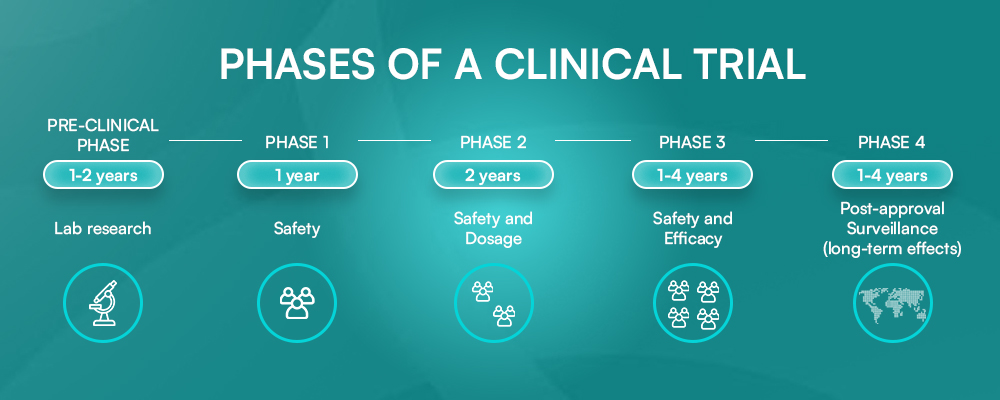
How Clinical Trial Phases Work Together
Different phases of clinical research trials are not standalone; they are all interconnected. Each stage informs the next, and every result adds to a growing database of safety and performance evidence. Additionally, the various clinical trials phases facilitate collaboration among scientists, regulators, and patients. Everyone contributes to building a reliable understanding of a drug’s overall impact.
When viewed together, these 4 different phases of clinical trials show a logical flow, from initial safety testing to real-world observation.
The Role of Volunteers and Ethics
None of this would be possible without the people who volunteer for these trials. Clinical trial participants take real risks to help advance science. That’s why every phase includes strict ethical review boards and informed consent processes. Before joining, every participant is told about potential risks and benefits. Moreover, they are given the right to withdraw at any time.
Ethical oversight ensures transparency and accountability. Regulatory authorities also monitor progress to ensure that each study meets quality standards. By maintaining this structure across all stages of clinical trials, research teams build trust and credibility within the healthcare system.
Conclusion
Every phase of clinical research trials plays a vital role in bringing safe and effective medicines to patients. If you’re involved in research or considering participation, understanding the clinical trial phases helps you make informed decisions about your involvement. Clinical studies are not just about science; they’re about people, trust, and progress. To stay informed about ongoing research or upcoming trials, connect with Covalent Clinical Research today. Our team is here to guide you through every step and help match you with opportunities that make a difference.
